
A chimney that's starting to fail is doing several things at once — and none of them are good.
It's letting water into your home. Failed flashing, cracked flaunching, open mortar joints, and deteriorated pointing are all active pathways for rainwater to enter the roof structure or track down inside the chimney breast. Once water is in, it moves. It saturates insulation, rots roof timbers, feeds mould behind plasterwork, and can travel all the way down a chimney breast to the ground floor before it becomes visible on a wall or ceiling. By the time most Dublin homeowners notice a damp stain, the water has been getting in for months — sometimes years.
It's weakening structurally. Dublin experiences significant freeze-thaw cycling through winter. When water gets into cracked mortar joints and freezes, it expands and forces the joints apart further. This progressive frost damage loosens brickwork gradually over several seasons until what started as minor repointing becomes a partial stack rebuild. Loose chimney pots and unstable stacks are also a genuine safety risk — to the roof covering below, to anyone in the property, and to pedestrians if a chimney is street-facing.
It's affecting your heating. A cracked flue, a blocked liner, or a missing cowl forces heat and combustion gases out of the wrong places and reduces the draw your stove or open fire depends on. Many Dublin homeowners with a sluggish stove or a smoking fire have had their appliance serviced repeatedly when the real problem is a deteriorating chimney that needs repair — not a new stove.
Getting a chimney repaired early is always the significantly cheaper option. Left through one Dublin winter, a minor repointing job can become a full stack rebuild. Left longer, it becomes a structural issue that affects the roof around it.

No jargon. No hard sell. Just a clear process from your first call to a weatherproof chimney.
Dublin's housing stock has a huge variety of chimney types — Victorian-era stacks on period terraces in Rathmines and Drumcondra, the single-stack semis common across the 1960s and 70s suburban estates, and older detached properties in areas like Rathfarnham and Clontarf with multiple stacks in varying states of repair. Here's what we deal with day to day across the city.
Flashing is the lead or code metal that seals the joint between the chimney stack and the roof covering. It's the single most common source of chimney leaks in Dublin. Flashing fails in several ways — it lifts from the mortar joint it's dressed into, it cracks along fold lines from years of thermal movement, or it was fitted incorrectly in the first place using the wrong type of sealer rather than being properly dressed and pointed. We replace and re-dress flashing correctly — stepped flashing on the sides, back gutter at the rear, front apron at the front. Done properly, it lasts decades. Done poorly, it leaks within a few years.
Mortar joints between bricks and between the chimney stack and its capping deteriorate over time, particularly at height where they're fully exposed to driving rain and UV degradation. We rake out all failed mortar to the correct depth and repoint using a mortar mix that matches the existing stack — an important detail on older Dublin properties where cement-heavy pointing can cause more damage than it prevents by trapping moisture and accelerating spalling.
The flaunching is the concrete cap that holds chimney pots in place and sheds water away from the top of the stack. When it cracks — which it does on virtually every Dublin chimney over time due to thermal movement — water gets directly into the top of the stack. Cracked flaunching is often visible from the ground if you know what to look for. We cut out failed sections and relay flaunching with the correct slope to direct water away from the stack.
When a chimney stack has deteriorated beyond economic repair — widespread spalling brick, structurally compromised mortar throughout, or frost damage that has worked through multiple courses — a full or partial rebuild is the right call. We take the stack down to sound brickwork, rebuild using matching brick where possible, and relay flaunching and flashing as part of the job.
Where a damp patch or stain on an internal wall or ceiling is suspected to be coming from the chimney, we trace the actual source before recommending any repair. This is the part of chimney work that separates a proper roofer from someone who just replaces what's visibly deteriorated and hopes for the best.
Cracked or missing chimney pots are replaced like-for-like. We also fit cowls and anti-downdraught caps where poor draw or downwashing is causing problems — a common issue on Dublin houses where taller surrounding buildings or trees have changed the wind patterns around the stack since it was originally built.
For disused chimney flues that no longer serve an active appliance, capping is the correct solution — it keeps weather out while still allowing the flue to ventilate, which prevents condensation and damp within the breast. We cap to a ventilated standard, not simply sealed, which is a detail a lot of builders get wrong.
What Dublin Homeowners Say About DJ Roofing
Most chimney problems develop slowly and give warning signs well before they become serious. Here's what to look out for on Dublin homes:
Outside the house:
Inside the house:
If you're experiencing any of these, don't leave it. Call me for a free inspection and I'll give you an honest assessment of what's happening and what it will cost to fix it.

DJ Roofing Dublin carries out chimney repairs throughout Dublin City and County — every area, north to south.
North Dublin: Swords, Malahide, Howth, Clontarf, Drumcondra, Glasnevin, Finglas, Blanchardstown, Castleknock, Santry, Raheny, Artane, Baldoyle
South Dublin: Rathfarnham, Terenure, Templeogue, Dundrum, Stillorgan, Blackrock, Dún Laoghaire, Dalkey, Killiney, Churchtown, Rathmines, Ranelagh, Sandymount
West Dublin: Lucan, Clondalkin, Tallaght, Palmerstown, Rathcoole, Newcastle, Saggart, Adamstown
Dublin City Centre: D1, D2, D4, D6, D7, D8, D12
Not sure if we cover your area? Call us — we almost certainly do.
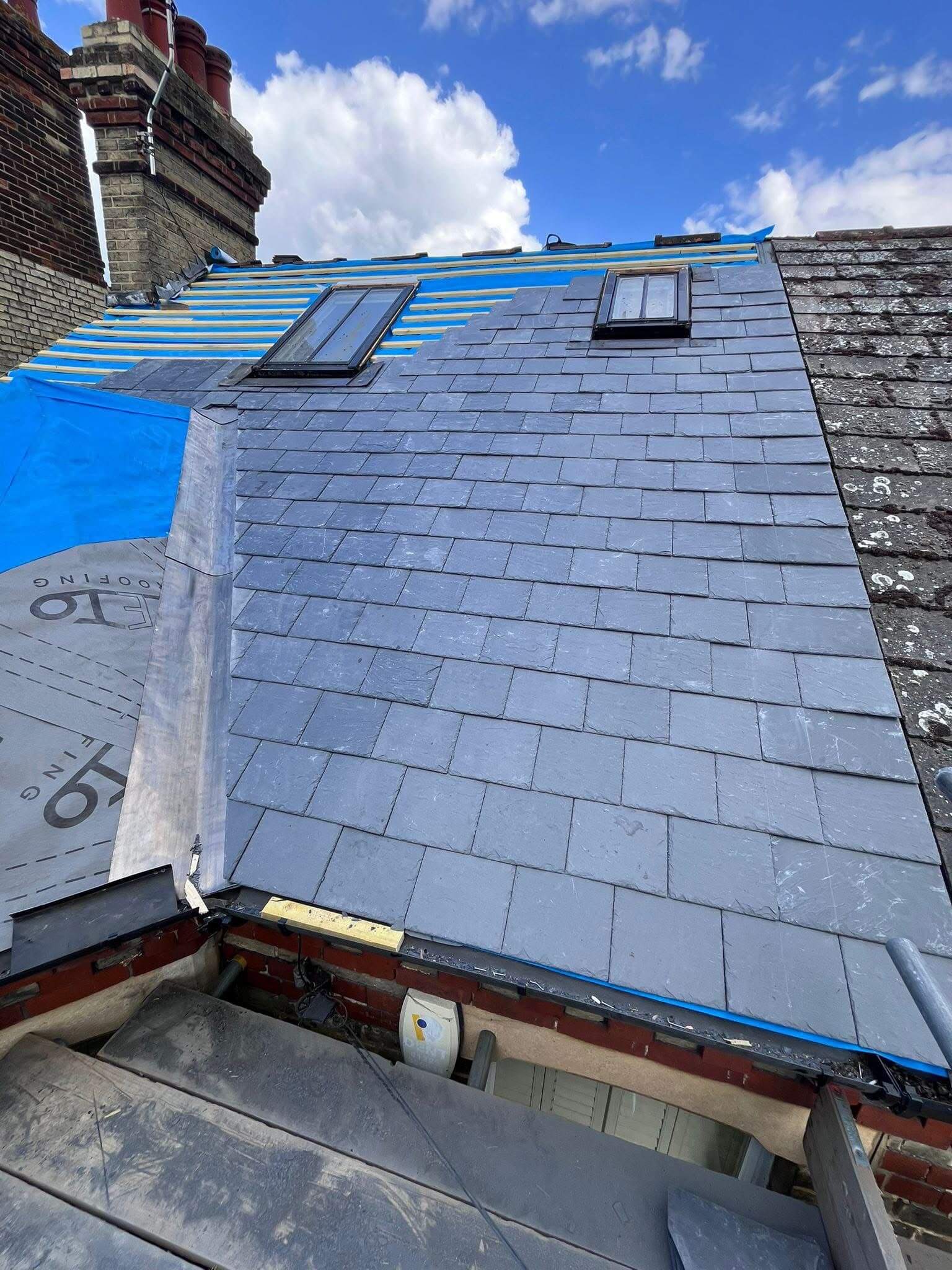
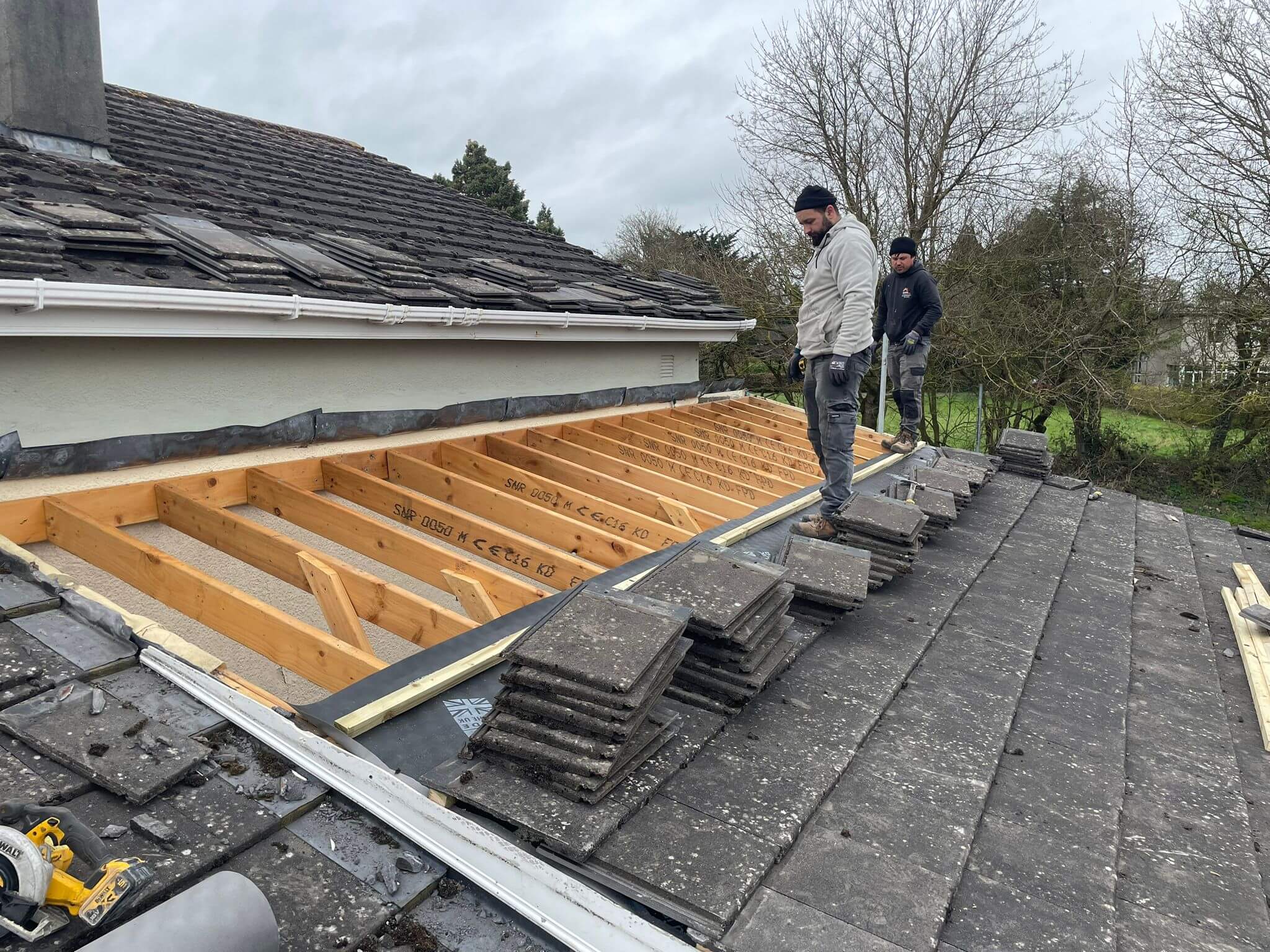
The tell-tale signs are a damp patch on a chimney breast wall or ceiling, a musty smell in rooms where the chimney runs, staining on wallpaper or plaster adjacent to the chimney, or visible deterioration on the stack itself — cracked flaunching, open joints, lifted flashing. The tricky thing is that chimney leaks can travel a long way from their source before becoming visible. If you're not sure, the safest thing is a proper inspection — we'll trace it correctly rather than guess.
It depends entirely on what needs doing. A straightforward flashing repair or repoint is significantly less than a full stack rebuild. We always inspect first and provide a written quote before any work starts — so you have an exact price, not an estimate that changes when the scaffolding goes up.
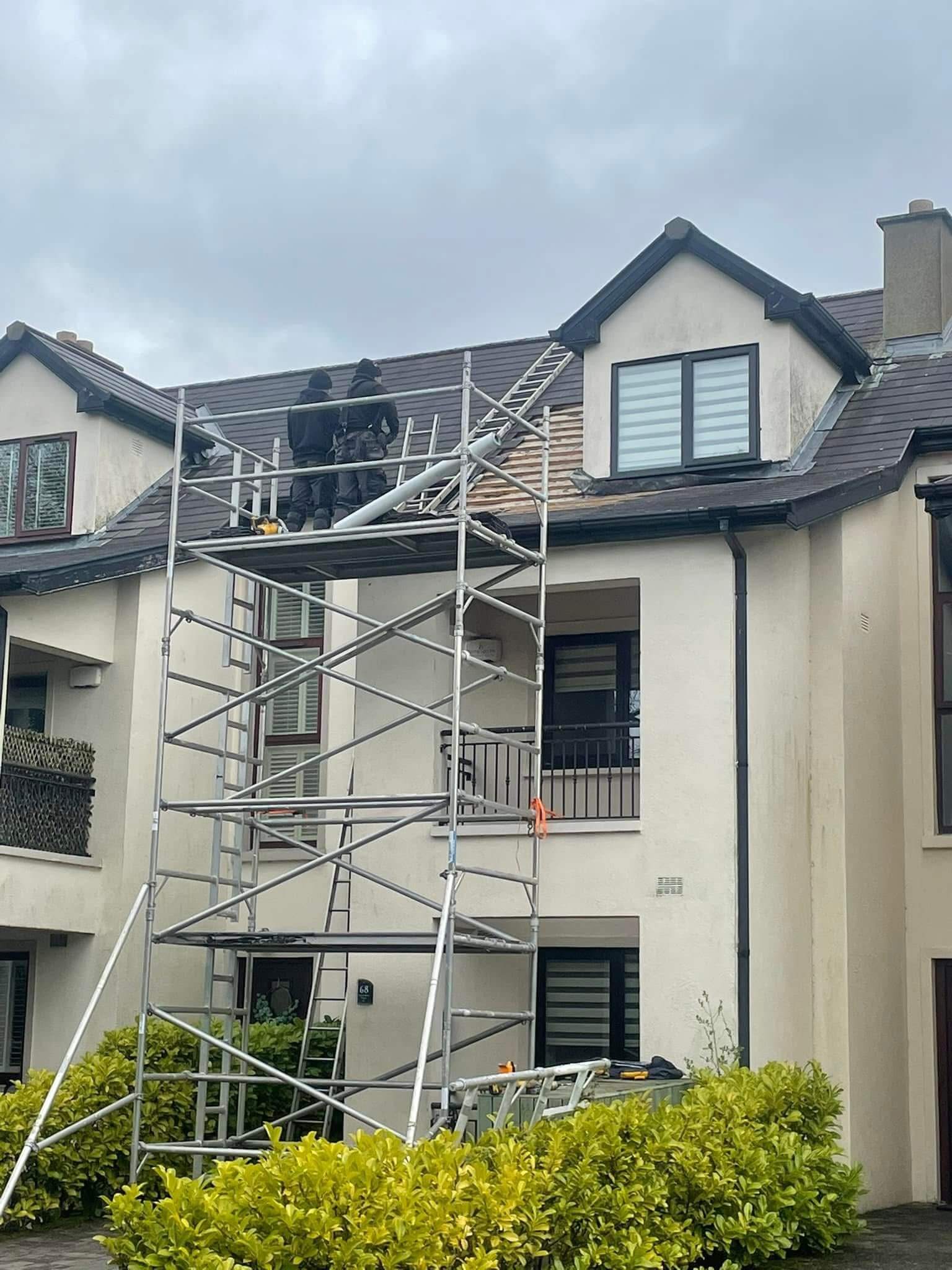
For most chimney repairs on a two-storey Dublin property, scaffolding or a tower is needed to work safely at stack height. Any contractor offering to carry out flashing or repointing work on a two-storey chimney from a ladder alone is cutting corners on safety. We factor the access method into the quote upfront.
Yes. A disused flue still needs to be properly capped and ventilated, otherwise moisture from inside the house rises through it and causes damp within the chimney breast. Many cases of recurring damp on an internal chimney wall in Dublin homes turn out to be a disused flue that was blocked solid rather than capped correctly — trapping moisture with nowhere to go.
We source matching brick where possible for partial stack rebuilds on older terraced and Victorian properties. It's not always a perfect match — brick that's been weathering for 100 years won't look identical to new brick — but we get as close as possible and are honest about what to expect before the job starts.
Most standard repairs — flashing replacement, repointing, flaunching — are completed within a day. Larger jobs involving partial or full stack rebuilds take longer. We'll give you a realistic timeframe when we provide the written quote.
If your chimney is showing signs of deterioration — a damp patch, visible cracking, lifted flashing, or a stove that draws poorly — don't leave it to develop through another Irish winter. What's a straightforward repair today can become a major structural job by spring.
Call DJ Roofing Dublin for a free chimney inspection across Dublin City and County. Honest assessment, written quote, no call-out fee, no pressure.
DJ Roofing offers a full range of roofing services for homeowners and landlords throughout Dublin.


DJ Roofing Dublin provides professional roofing services to homeowners and commercial property owners throughout Dublin City and County. Our services include roof repairs, roof replacement, flat roof repairs, chimney repairs, slate roof repairs, fascia and soffit replacement, gutter repairs, skylight repairs, and emergency roofing.
